Subject Identification
Fatty15
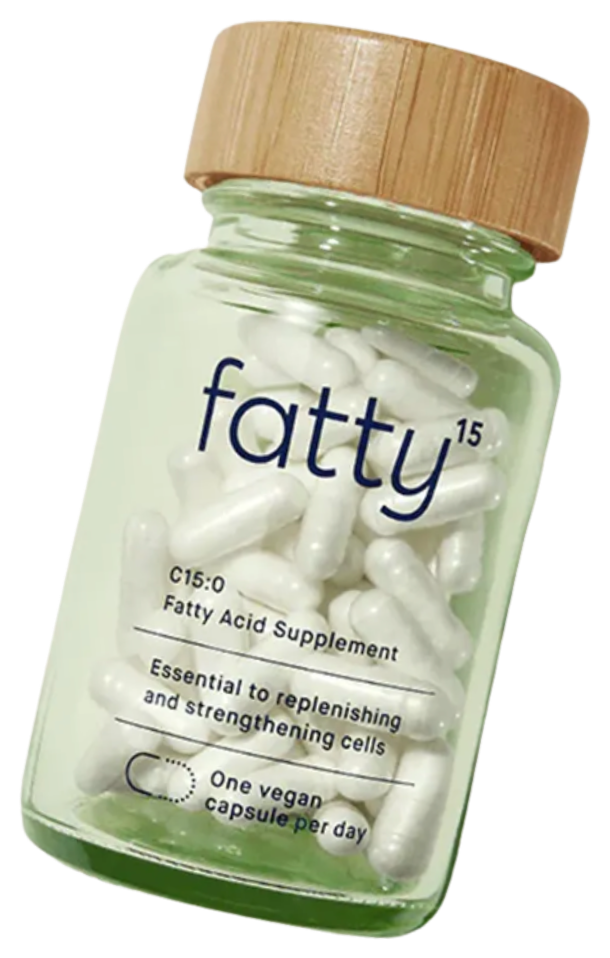
Verdict
"One Bio Star. One molecule, and an unusually serious case for its place in human nutrition. Fatty15 distinguished itself through radical formulation restraint, a single identifiable active at a declared dose, a biologically credible hypothesis pursued through cells, animals, sixteen cohorts and a randomised human trial, demonstrated human target engagement, a reassuring early safety record, batch-verified purity with independent testing, and a refillable glass object built to be kept. The Inspectorate stops at One Star for two reasons that are stated in full: the documentation behind the company's stewardship and sourcing claims has not been published, and the most consequential human claims for the molecule remain ahead of the evidence. Institutional score 3.67, floor 3.29. The molecule has earned attention. The next Star requires paper. The third requires consequence."
Most longevity supplements are exercises in accumulation. Fatty15 is an exercise in subtraction: one capsule, one molecule, one biological proposition pursued unusually far. The simplicity is deceptive. Behind the one hundred milligrams is an argument that runs from Navy dolphins through lipid biology, cellular models and animal work to a randomised, placebo-controlled trial in humans, and it is an argument the company keeps testing rather than merely marketing. The capsule contains pentadecanoic acid and a vegetable cellulose shell and nothing else, which means the product has left itself nowhere to hide: if C15:0 fails, the product fails with it. That is formulation integrity, and it is rare. The question before the Inspectorate was never whether C15:0 is interesting. It is. The question was how much of the promise has crossed from association and mechanism into demonstrated human effect, and how much of the company's own conduct is documented rather than described. On the first, the trial shows the molecule reaches the blood and moves one liver enzyme; the outcome evidence is not yet there, and an independent 2026 analysis found no causal cardiovascular signal. On the second, a company that publishes its trial nulls has not published a carbon figure, a named facility, a batch certificate or a single purity number. Those are the two distances between this Star and the next, and neither is a distance in the molecule.

BIO-STARRED
VOL. I · MMXXVI–MMXXVII
13-Circle Assessment
Inspector Notes
“Most longevity supplements arrive as stacks. Fatty15 arrives as an argument.
“One molecule. One hundred milligrams. A proposition that a largely overlooked odd-chain fatty acid may matter more to human biology than nutritional convention has recognised. What distinguishes Fatty15 is not simply the novelty of that proposition. It is the seriousness with which the company has pursued it.
“Start with the capsule, because the capsule is the whole product. Pentadecanoic acid and a vegetable cellulose shell. Nothing else. No proprietary blend to hide a weak dose inside, no carrier oil, no flavour system, no fourteenth ingredient to take the credit if the first thirteen do nothing. Fatty15 leaves itself nowhere to hide. If C15:0 fails, the product fails with it. In a category built on accumulation, that is the rarest decision a formulator can make, and it is the reason the Inspectorate took this product seriously before reading a single paper.
“Then the origin, which is not the usual one. A veterinary epidemiologist working with the Navy's bottlenose dolphins noticed that animals with higher levels of certain odd-chain fatty acids aged better, and that a change of fish in the diet shifted their metabolism. The Navy patented the findings, licensed them to her company under a notice in the Federal Register, and the Office of Naval Research funded the early work. Whatever else is true, this is not a supplement invented by a marketing department and reverse-engineered into a science story. The science came first and the company came out of it.
“The molecule is genuinely interesting. C15:0 is a fifteen-carbon saturated fat found in dairy and some fish, and for decades epidemiologists used the amount in a person's blood as a marker of how much dairy fat they ate. Then the marker started behaving like more than a marker. Across sixteen cohorts and sixty three thousand people, higher circulating C15:0 tracked with about twenty percent lower incidence of type 2 diabetes. A meta-analysis of eighteen studies found a modest association with lower cardiovascular disease. In cells, the molecule is a dual partial agonist of two PPAR receptors, activates AMPK, steadies membranes and lowers mitochondrial reactive oxygen species. In mice on a high-fat diet it lowered glucose, cholesterol and inflammatory markers.
“Here the file has to hold two ideas at once, and it does. Association is not supplementation. A person with high C15:0 in their blood eats differently, lives differently, and may have gut bacteria that make the molecule for them. None of that tells you what happens when you swallow a purified capsule of it. And most of the mechanistic work was done by the company's own founder, with the disclosures written out in full. Commercial proximity does not erase a result. It raises the value of independent replication.
“Which is why the randomised trial matters so much, and why I read it twice. Thirty young adults with obesity, at a university, with NIH money, the company supplying only the capsules and the placebo, no author with a stake. Two hundred milligrams a day for twelve weeks. The molecule reached the blood: circulating C15:0 rose by 1.88 micrograms per millilitre more than placebo, and the P value was 0.003. GGT, a liver enzyme, fell relative to placebo. Almost everything else measured did not move. In the half of the treated group who reached five micrograms per millilitre, ALT and AST fell further and haemoglobin rose, and those people had also taken more of their capsules. The authors call it potentially relevant and worth further study. That is exactly the right sentence, and the company should be proud of having a trial that earns it.
“Now the two facts a buyer needs and will not find on the front of the jar. The trial used two hundred milligrams. The capsule contains one hundred. Nobody has published what one hundred milligrams does to the level in your blood, so the trial's result belongs to C15:0 and not yet to this dose of it. And in 2026, a group at the University of Minnesota with no commercial ties tested the cardiovascular story in two national cohorts. Higher C15:0 went with slightly lower blood pressure. It did not go with less heart disease, and the genetic analysis found no causal effect on anything they measured. Their conclusion, in their words, was that the collective evidence is not consistent with a causal cardiovascular benefit. The epidemiology opened the door. The causal evidence has not yet walked through it.
“There is also the paperwork, and for a company this careful about its science it is careless. The ingredient's purity is at least ninety eight percent where the batch testing is described, more than ninety nine percent on one page, more than ninety nine and a half on another, and absent from the label. The ingredient is synthesised on one page and made from plants on another. The GRAS status is described as received from the FDA; it is self-affirmed, which is legitimate and which is not that. The FAQ says GRAS makes the product safe for pregnant women and children from four, and no study of C15:0 supplementation in either group exists. None of this is a lie about what is in the capsule. All of it is a company that has not read its own website as carefully as it reads its own data.
“So, the Star. One Bio Star, computed on the anchors, no ruling applied. The institutional score is 3.67 and the floor is 3.29, at Stewardship and Cultural Responsibility, where a refillable glass jar and a synthetic route that needs no dairy herd are real environmental decisions with no published figure, no named facility and no sourcing or labour record behind them.
“I want to be exact about the distance to the second Star, because it is short and it is all paper. A carbon figure. A named manufacturer. Sourcing and labour documentation. Published batch certificates. One purity number, used everywhere. A website that says the same thing on every page. Fatty15 could earn Two Bio Stars without changing anything in the capsule, and the Inspectorate would welcome the file.
“The third Star is a different matter, and no amount of paperwork reaches it. Three Stars requires consequence: large, independently replicated, long-duration human evidence that taking this dose of this molecule changes the trajectory of a person's health. That evidence does not exist yet for any C15:0 product, and the company, to its credit, is among the few in its category funding the trials that could produce it.
“One Bio Star recognises the rare alignment of restraint, biological plausibility, manufacturing discipline and an evidence base that has entered controlled human testing. The stars beyond it are withheld for a simple reason: the most important question is no longer whether C15:0 can change a biomarker. It is whether doing so changes the trajectory of human health. That answer is still being written, and this is one of the few companies writing it.”
— Inspector 7
13-Circle Findings
Circle by Circle.
I · Core Integrity
Pass
Pass, flagged in three places. What is in the capsule is exactly as declared, the company and its science are real and findable, and no enforcement action exists. The flags: four purity figures across the company's own pages, an FDA phrasing the same FAQ contradicts, and a GRAS status described as received from the FDA when it is self-affirmed. None is a false statement about the product; together they are housekeeping the company has not done.
II · Efficacy
Pass
3.57. Exceeds the standard for the category on evidence base, mechanism, integration and formulation rigor: a university-run, NIH-supported randomised trial with demonstrated target engagement, a pooled analysis of sixteen cohorts, a meta-analysis of eighteen studies, and a specific cellular mechanism. Held at Meets on consistency, clinical significance and independent validation: one liver enzyme moved in thirty people over twelve weeks at twice the dose sold, the exploratory threshold findings are exploratory, and the one large independent test of the cardiovascular claim found no causal signal.
III · Physiological Alignment
Pass
3.67. Biological in method throughout: a nutrient present in the human diet and bloodstream, restored to intake rather than forced, with no stimulant, no pharmacological lever and nothing asked of the body beyond swallowing.
IV · Regulation & Recovery
Pass
3.60. Low physiological burden, no notable adverse events in the trial, side effects reported in under one tenth of one percent of customers, and a protocol that needs no cycling and produces no rebound. No restorative contribution is claimed by the product itself, and none is scored.
V · Input Quality
Pass
3.86. Ingredient selection and formulation discipline are the exemplar: one molecule, one excipient. Raw material grade is real, a stated minimum purity verified per batch by validated methods. Provenance, traceability and sourcing hold the Circle at Meets: the manufacturer is unnamed, batch certificates are unpublished, and the ingredient is described as synthesised on one page and made from plants on another.
VI · Environmental Quality
Pass
4.00. Glass, bamboo, paper and cellulose in contact with the product; no plastic in the pack; a tasteless, odourless powder capsule in place of the oils the category usually asks people to swallow. Environmental load as a product is close to nil.
VII · Operational Precision
Pass
3.50. Process and quality control are strong: single-ingredient synthesis, batch release testing, and anonymous third-party purchase testing at ISO 17025 laboratories that met the programme threshold. One hard mark holds the Circle to the floor of the tier: reliability across touchpoints, where the company's pages disagree with each other on purity, on how the ingredient is made, on the state of its trials, and on the refill price.
VIII · Care & Competence
Partial
3.43. Led by the scientist who did the originating research and a physician, with the science under their own names and the commercial interest disclosed. Guidance on use is clear and side-effect reporting is transparent. Held below 3.50 by conventional, undocumented service and team standards, and by population safety language for pregnancy and children that rests on GRAS status alone.
IX · Protocol Design
Pass
4.29. Close to the best protocol design in the volume. One small tasteless capsule, once a day, from a jar that lives on the shelf and is refilled by post every ninety days. The deduction is trust architecture: a reader meets four purity figures and an FDA phrasing the company itself contradicts.
X · Aesthetic Restraint
Pass
4.00. Discipline and subtraction at their limit: one molecule where the category sells fourteen, in glass and bamboo where it uses white plastic. The single failure of restraint is the voice, which promises to slow and even reverse cellular aging on cellular and animal evidence.
XI · Stewardship
Partial
3.29, and one of the two floors of the file. The refillable glass vessel, paper refills, recycled mailer and a synthetic route that needs no dairy herd are the substance of a genuine environmental position. Behind them there is no carbon figure, no life-cycle assessment and no stated long-term commitment. The design is exemplary; the accounting is absent.
XII · Cultural Responsibility
Partial
3.29, the other floor. Attribution of the science is complete and the Navy licence is named, which is exemplary. Manufacturer, facility, sourcing relationships and labour practices are not documented at all. Every one of those is a disclosure that could be made without changing anything about the capsule.
XIII · Enduring Value
Pass
3.57. Fits any life and has stayed the same product for five years in a category that turns over annually. Repeatability is established at the level of the blood and not at the level of felt outcome; durability beyond twelve weeks is untested; the trial is published in full with its nulls, while the customer survey cited for sleep, energy and mood has no published method.
The Record
What was examined.
The molecule
Pentadecanoic acid, C15:0, a fifteen-carbon odd-chain saturated fatty acid present in dairy fat and some fish and measurable in human circulation, long used as a biomarker of dairy-fat intake.
The discovery
Navy Marine Mammal Program research led by veterinary epidemiologist Stephanie Venn-Watson linked higher odd-chain fatty acids in bottlenose dolphins to better metabolic ageing, and a modified fish diet shifted their metabolism and relieved chronic anaemia, published 2020 with Office of Naval Research funding. Patents assigned to the Secretary of the Navy were licensed exclusively to Epitracker under a 2017 Federal Register notice; Seraphina Therapeutics, its spinout, launched Fatty15 in 2021.
The essential question
Company-associated papers argue C15:0 meets the criteria for essentiality: dietary availability, circulating levels that decline with age, cellular activities, deficiency-like associations and a supplementation response. An independent 2024 review found it might meet both conditions and that both need further investigation. No authoritative nutrition body recognises C15:0 as essential.
The formulation
One hundred milligrams of FA15 per capsule in a vegetable cellulose shell; no other ingredient. Stated as synthesised to match the natural molecule, vegan, dairy-free, no oil, no fillers.
The dose
One hundred milligrams a day as sold. Two hundred milligrams a day in the randomised trial; three hundred in an independent adjunct trial. No human study of what one hundred milligrams achieves in circulation was located.
The epidemiology
Sixteen cohorts, sixty three thousand people: twenty percent lower incidence of type 2 diabetes across the tenth to ninetieth percentile of circulating C15:0, with C17:0 stronger. Eighteen studies, forty two thousand people: twelve percent lower cardiovascular disease for C15:0, with substantial heterogeneity and a null in the Women's Health Initiative. Mortality U-shaped in the one cohort reporting it.
The mechanism
Dual partial agonist of PPAR alpha and delta at defined potencies; AMPK activation; reduced mitochondrial reactive oxygen species; membrane stabilisation; thirty six activities in ten of twelve human cell systems; lower glucose, cholesterol and inflammatory markers in mice on a high-fat diet. Largely authored by the company's founder, with disclosures. One independent group found gut bacteria produce C15:0 from fibre and that it protects mouse liver.
The human trial
The Journal of Nutrition, 2024. Thirty young adults with overweight or obesity, mean age twenty, randomised two to one, two hundred milligrams daily for twelve weeks, University of California San Diego, NIH support, capsules and placebo supplied by the company, no author conflict. Circulating C15:0 plus 1.88 micrograms per millilitre versus placebo, P 0.003. GGT reduced versus placebo. ALT, AST, lipids, glucose, insulin, CRP, haemoglobin, weight and blood pressure unchanged in the whole-group comparison. No notable adverse events.
The threshold
Exploratory: ten of twenty treated participants reached five micrograms per millilitre and showed median falls in ALT of twenty nine units and AST of six, and a rise in haemoglobin of 0.6 grams per decilitre, against no change in those below threshold and in placebo. The threshold group also took ninety five percent of doses against eighty four. Not a randomised comparison and not a prespecified primary outcome.
The contrary evidence
Frontiers in Nutrition, 2026. CARDIA, 3,196 people; ARIC, 3,889. Per standard deviation of plasma C15:0: systolic pressure lower by 1.5 and 2.7 millimetres of mercury, incident hypertension fourteen percent lower. Incident cardiovascular disease: no association in either cohort. Cardiac structure and function: no association. Mendelian randomisation: no causal effect on blood pressure, resting heart rate or hypertension. Authors' conclusion: the collective evidence is not consistent with a causal cardiovascular benefit of C15:0. No commercial funding.
The purity
Minimum ninety eight percent, verified on each batch by ICH-validated methods, per the company's own description of testing. More than ninety nine percent and more than ninety nine and a half percent on landing pages. No figure on the label. No batch certificate published.
The manufacturing
cGMP manufacture in the United States is stated; the manufacturer and facility are not named. Finished product tested under TESTED by SuppCo at ISO 17025 laboratories after anonymous purchase, meeting the programme threshold of at least ninety five percent of label claims; the exact result is not disclosed.
The safety record
No notable adverse events in the twelve-week trial. Side effects reported by the company in under one tenth of one percent of customers. GRAS self-affirmed for use up to 245 milligrams a day; no FDA GRAS notice exists and no toxicology has been published. No clinical data in children, pregnancy or lactation.
The conflicts
The founder is co-founder and employee of Epitracker and Seraphina Therapeutics, which financed the mechanistic studies and hold exclusive Navy licences; a co-author of the 2023 comparison with longevity compounds is a co-founder and consultant to Seraphina. All disclosed in the papers. The randomised trial, the epidemiology and the 2026 analysis are independent.
The capsule
A small white capsule, half-filled by the powder, tasteless and odourless, swallowed once a day with or without food. No oil, no return, no cold chain. Adherence in the trial was eighty four to ninety five percent.
The packaging
Glass bottle with a bamboo cap bought once; ninety-day refills in paper pouches; recycled paper mailer with algae ink; no plastic in the pack. Renewable and recycled materials are claimed; no figure is published.
The limit
Institutional score 3.67, floor 3.29 at Stewardship and Cultural Responsibility, three Circles at 4.00 or above. Two Stars requires 4.00, a floor of 3.50 and six Circles at 4.00: the distance is documentation. Three Stars requires large, independently replicated, long-duration human evidence of outcomes at the dose sold: the distance is consequence.
The Reading Room
Inside the Unredacted File.
The full 13-Circle rubric. The Inspector's complete notes. The Evidence behind every finding. Filed inside the Membership.
Apply for Membership →Continue the Archive