Subject Identification
Auria Biological Breast Cancer Screening Test
Verdict
"One Bio Star, awarded to the collection method and the published biology behind it, and not to the screening performance the product advertises. The institution could not substantiate the figures on the product page, and a reader should understand what a positive result from this test does and does not mean before buying one."
Two proteins in a tear, S100A8 and S100A9, combined with age. The biology is real and peer-reviewed: a 2022 paper in PLOS ONE measured both proteins across 273 participants and reported an area under the curve of 0.902 with 84.8 percent sensitivity and 86.4 percent specificity in its validation cohort. The collection is genuinely remarkable, a paper strip under the lower eyelid for five minutes at a kitchen table, scored by the brand's own users at 1.4 out of 10 for discomfort. The brand says clearly that the test supplements screening rather than replacing it, and tells every user to keep having mammograms. Those are the reasons for the star. Here is why it is one and not more, and why the institution has scoped what it is awarded for. The product advertises 92 percent sensitivity and 58 percent specificity. Neither figure appears in either peer-reviewed paper. The institution traced them to an unsigned, undated company white paper which reports 92 percent sensitivity on 52 samples and 54 percent specificity on 50, a different number from the one on the website. At the specificity advertised, roughly 42 of every 100 women without breast cancer will be told their result is clinically significant, and at the breast cancer rate seen in real screening populations about 99 of every 100 women who receive that result will not have cancer. The senior vice president for early cancer detection science at the American Cancer Society has said on the record that the test has a very high false positive rate and that no breast cancer screening guideline advises women to take it. Four company trials covering roughly 2,255 enrolled participants have lapsed with no results posted, no new primary data has been published since October 2022, and no group unconnected to the company has replicated the assay.

BIO-STARRED
VOL. I · MMXXVI–MMXXVII
13-Circle Assessment
Inspector Notes
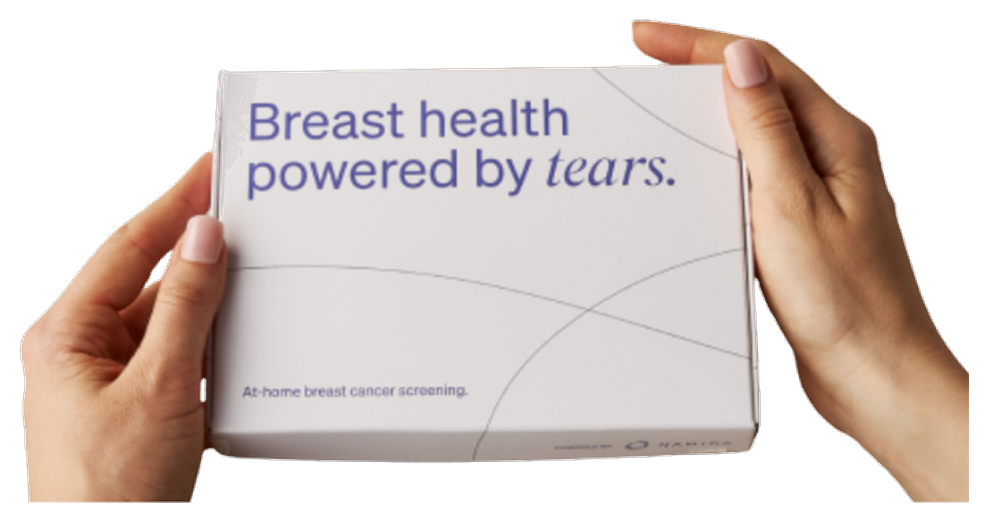
“The box makes the proposition feel almost suspiciously simple. Inside: an instruction booklet, registration details, a small tube and a vial of solution, a label, return packaging, and two narrow collection strips. The second is not a second sample. It is a spare, because a strip that has touched any other surface is not to be reused.
“The strip is thin filter paper. You fold the marked end, tuck it just inside your lower eyelid, and leave it there for five minutes. Five minutes is short on paper and surprisingly long when there is paper against your eye. It is not painful. It is strange, the way anything near an eye is strange, and then it is over. I did it at a kitchen table with a glass of water and nobody watching. Then the strip went into the tube, the tube into the mailer, the mailer into a post box. That was the entire physical act of screening, and I kept thinking about how many women I know who have not been screened in years because the alternative involves a clinic, a machine, and an afternoon off work.
“The result came back in about a week, one word, with a plain explanation of what that word does and does not mean and the offer of a free conversation with a breast health educator. I took it. It was unhurried and nobody tried to sell me anything. The instruction I was given was the correct one: talk to your provider about when to screen again.
“I wanted to like this, and the collection is genuinely a piece of good design. So I went and read everything behind it, and what I found is why this file reads the way it does.
“The science is two proteins and a number. Auria measures S100A8 and S100A9 in tear film and combines them with age. There is a real peer-reviewed paper: 273 women, published in PLOS ONE in 2022, reporting about 85 percent sensitivity and 86 percent specificity. The company paid for it, one author is an employee and a shareholder and holds the patent, two more sit on its advisory board, and the paper says all of that out loud. The authors also write, in their own words, that the sample is small for breast cancer research and that significantly larger studies would be needed to reach a sound conclusion.
“But the numbers on the product page are not those numbers. The page says 92 percent sensitivity and 58 percent specificity, with no citation anywhere. I went looking. They come from an unsigned, undated white paper on the company's own site, and that document says 92 percent sensitivity on 52 samples and 54 percent specificity on 50. Not 58. I could not find where 58 comes from. The clinical validation of the test you can actually buy rests on about a hundred samples, run in-house, never peer-reviewed. And there is a third number. The company's own provider brochure says 92 percent sensitive and 54 percent specific, and it says that 92 percent is for detecting breast abnormalities, not breast cancer. The same brochure says the proteins go up with benign lumps too and that the test cannot tell a benign one from a malignant one. None of that qualification is on the page a customer reads.
“Now the part I think matters more than anything else in this file. Sensitivity and specificity tell you how a test behaves on people whose answer is already known. They do not tell you what your result means. For that you need to know how common breast cancer is among women being screened, and the best figure for that comes from 1.68 million mammograms: about 5 cancers per 1,000. Put the company's own numbers against that rate and this is what comes out. Roughly 42 out of every 100 women who take this test will be told their result is clinically significant. And of those 42, about one will have breast cancer. The other 41 will have had a frightening result, and then imaging, and then nothing.
“That number is about one percent, and I could not find it published anywhere, including by Auria. For comparison, a mammogram flags about 12 in 100 women and roughly four in a hundred of those turn out to be cancer. I am not saying the test does nothing. I am saying that the single most important fact about a positive result is missing from every page a customer reads before paying 199 dollars.
“Then there is what other people say. The American Cancer Society's senior vice president for early cancer detection science has said, on the record, that this test has a very high false positive rate, and that no breast cancer screening guideline advises women to take it. The task force that sets American screening policy rates ultrasound and MRI, both far better studied than tears, as insufficient evidence for supplemental screening. And four of the company's own registered trials, including one meant to enrol 1,500 women with dense breasts, have quietly lapsed with no results posted and no update in three years.
“One more thing that stopped me. New York is the only state that reviews a laboratory's validation data before letting it sell a test like this. New York is the only state where Auria is not sold.
“I want to be fair about what I did not find, because I went looking. There is no FDA warning letter against this company. No enforcement action, no lawsuit, no consumer complaint record. It is a Delaware corporation in good standing with a real laboratory, a named director, and a CLIA certificate I checked myself in the federal database, number 04D2182040. They do not publish that number and they should, because anyone can verify it in a minute. Nothing here says these are bad people. What it says is that the gap between what has been proven and what is advertised is too wide for the subject matter.
“I want to be fair, because the company does several things right that its competitors do not. It says plainly that this supplements screening and does not replace it. It tells you to keep having mammograms. It does not claim to diagnose anything. It published its biology in a real journal and disclosed every conflict. Those are not small things, and they are the reason there is a star on this file at all.
“But the star is for the strip of paper, the five minutes, the prepaid box, and the honesty about what this is not. It is not for the numbers on the product page, which I could not verify and which do not match the company's own document. If you are considering this test, my advice is the same as the American Cancer Society's: keep your mammogram appointment, and go in knowing that if this comes back clinically significant, the odds are about ninety-nine to one that you do not have cancer.”
— Inspector 7
13-Circle Findings
Circle by Circle.
I · Core Integrity
Pass
The company is consistent on the most important point: the test supplements screening, does not diagnose, and produces both false positives and false negatives, and it tells users to continue mammography. That discipline is real and it distinguishes Auria from products the FDA has acted against. Two findings sit against it. The performance figures on the product page are unsourced, and three different specificity figures circulate across the company's own materials. And the headline sensitivity is stated for the detection of breast abnormalities rather than breast cancer specifically, a distinction the company's own provider brochure makes but the consumer page does not.
II · Efficacy
Partial
The underlying biology is published and peer-reviewed. The marketed algorithm is not. The 2022 PLOS ONE work reported 84.8 percent sensitivity and 86.4 percent specificity, and a second 2022 paper on 847 samples reported a range of 52 to 90 percent sensitivity and 31 to 79 percent specificity across three models. The 92 and 58 percent pair advertised appears in neither, and traces to an in-house white paper describing 52 samples for sensitivity and 50 for specificity. No group unconnected to the company has replicated the assay, and four company trials have lapsed without results.
III · Physiological Alignment
Pass
Collection is non-invasive and requires only tear fluid. No radiation, no compression, no blood draw, no preparation. The five-minute ocular collection is strange rather than painful, reported by the brand's own users at 1.4 out of 10.
IV · Regulation & Recovery
Partial
The product does not act on physiology, and several sub-criteria have no subject in a screening test. What the Circle must weigh instead is the burden the result creates. At the advertised specificity, more than four in ten healthy users receive a clinically significant result, each of which correctly routes to imaging and most of which will resolve as nothing. That is a real cost carried by the user.
V · Input Quality
Partial
A purpose-built and well-judged collection system: filter-paper strip, tube, solution, label, prepaid return, and a spare strip for the commonest error. The laboratory method and the biomarkers are documented. Supplier-level provenance for the kit components was not available.
VI · Environmental Quality
Pass
Collection moves from the clinic to the home, with no sensory burden beyond brief contact between paper and eyelid, and packaging designed to protect a biological sample in transit.
VII · Operational Precision
Partial
Samples are processed in a CLIA-certified high-complexity laboratory with a seven-day receipt window, defined handling, automatic replacement of rejected kits, and results in ten business days. The institution verified the certification independently in the federal CMS database: certificate 04D2182040, Namida Lab, Inc., Fayetteville, a Certificate of Compliance, surveyed directly by the state or federal agency rather than by an accreditor such as the College of American Pathologists. The company does not publish the number itself. What CLIA establishes is that the laboratory can measure reliably in its own hands; in the words of CMS's own guidance, the CLIA program does not address the clinical validity of any test.
VIII · Care & Competence
Partial
Results are provider-reviewed, a breast health consultation is offered without charge, and the materials route positives to imaging and negatives back to routine screening, which is correct in both directions. What no material gives the user is the one number that determines what their result means, which is the likelihood that a clinically significant result actually indicates cancer.
IX · Protocol Design
Pass
Registration, collection, return and result form one coherent, low-friction sequence, and the spare strip and prepaid mailer show real thought about where users fail. The absence of an application is a gap for a test the brand says may be repeated every six months.
X · Aesthetic Restraint
Pass
The kit makes an intimidating category feel calm and approachable without making the laboratory process feel unserious. Restraint in the physical design is genuine.
XI · Stewardship
Partial
The kit necessarily creates single-use laboratory and shipping waste. No carbon assessment, packaging life-cycle analysis or environmental position was located.
XII · Cultural Responsibility
Pass
The product lowers real barriers for people with dense breasts or implants, for the screening-avoidant, and for those far from a clinic, and it is offered to all of them on the same terms. That intent is genuine and the institution credits it.
XIII · Enduring Value
Partial
Enduring value depends on evidence that has not arrived. Four registered trials covering roughly 2,255 estimated participants have lapsed to unknown status with no results posted, no new primary data has been published since October 2022, and the second product in the range has been described as in validation since 2022.
The Record
What was examined.
Mechanism
Auria measures two proteins, S100A8 and S100A9, in tear fluid by ELISA and combines their concentrations with the user's age. Both are inflammatory proteins. They are not specific to cancer, which is why an elevated result cannot distinguish a malignant breast abnormality from a benign one, from recent injury or surgery, or from other inflammatory processes. The brand states this itself.
The published science
Daily, Ravishankar, Harms and Klimberg, PLOS ONE, April 2022. A case-control study, not a screening study: 273 participants recruited purposively across women attending screening mammography, women having a biopsy, and women recently diagnosed. Discovery by mass spectrometry on 102 samples identified 14 candidate proteins from 301. ELISA validation on 171 samples produced an area under the curve of 0.902, sensitivity 84.8 percent, specificity 86.4 percent. Namida Lab funded the work. One author is an employee, an inventor on the patent, and a shareholder; two more sit on the company's clinical advisory board. The authors' own stated limitation: the sample is large for tear proteomics and small for breast cancer, and significantly larger studies would be needed to reach a sound conclusion.
The second paper
Daily and colleagues, Biomarker Research, October 2022. 847 tear samples from a single site in Arkansas, 108 cancers. Three logistic regression models evaluated at two thresholds produced, in the authors' words, sensitivity ranging from 52 to 90 percent and specificity from 31 to 79 percent. The high-sensitivity scenario that reaches 90 percent pairs it with specificity of 36 to 40 percent. Neither this paper nor the PLOS ONE paper names the Auria product.
Where the advertised figures come from
The product page states 92 percent sensitivity and 58 percent specificity with no citation. Neither figure appears in either peer-reviewed paper. The institution traced them to an unsigned, undated white paper published by the company, which reports in its clinical validation table 92 percent sensitivity on 52 samples run in duplicate and 54 percent specificity on 50 samples. The specificity in the company's own document is four points lower than the specificity on its website, and the institution could not reconcile the difference to any source. A further company white paper that would explain how a protein concentration becomes a reported score is a broken link on the company's own site. A third figure exists: the company's own provider brochure, dated March 2023, states 92 percent sensitivity and 54 percent specificity, and describes the sensitivity as being for the detection of breast abnormalities rather than breast cancer. The same brochure states that the markers are also elevated in association with benign masses and that the test should not be used to differentiate malignant from benign. The consumer page carries neither qualification.
What a positive result actually means
This is the calculation the institution considers most important and could find published nowhere, including by Auria. Sensitivity and specificity describe how a test behaves on people already known to have or not have a disease. What a user needs is the reverse: given a positive result, how likely is cancer. That depends on how common the disease is in the tested population. Using the Breast Cancer Surveillance Consortium benchmark of 5.1 cancers detected per 1,000 screening mammograms, drawn from 1.68 million examinations, and the company's own advertised figures of 92 and 58 percent: about 42 in every 100 women tested will receive a clinically significant result, and about one of those 42 will have breast cancer. The positive predictive value is approximately 1 percent, or one in ninety. Using the company's white paper figure of 54 percent specificity, 46 in 100 are flagged. Using the best published high-sensitivity model, 90 and 36 percent, 64 in 100 are flagged. For comparison, from the same benchmark, screening mammography flags 11.6 percent of women and its positives carry a predictive value of 4.4 percent. This calculation is the institution's own arithmetic on published figures.
Regulatory standing
Auria is a laboratory-developed test. The FDA published a rule in May 2024 that would have brought such tests under device regulation; a federal court vacated that rule in its entirety on 31 March 2025, holding that the agency lacks the statutory authority, and the FDA formally reverted to the prior regulation on 19 September 2025. There is therefore no FDA premarket review of this test, none has occurred, and under current law none is scheduled. Oversight sits with CMS under CLIA. In the words of CMS's own guidance, a laboratory's analytical validation of such a test is limited to the conditions, staff, equipment and patient population of that particular laboratory, is reviewed at a routine survey after testing has already begun, and, unlike the FDA scheme, the CLIA program does not address the clinical validity of any test. CLIA certification is a statement about the laboratory, not about whether the test is medically useful. The institution verified the laboratory's certification directly: CLIA number 04D2182040, a Certificate of Compliance effective June 2026, laboratory director Dr Chris M. Albertson, the address matching the company's. A Certificate of Compliance means the laboratory is surveyed by the state or federal agency rather than accredited by a body such as the College of American Pathologists; the company claims no such accreditation.
New York
New York is the only United States jurisdiction that independently reviews the validation data for a laboratory-developed test before permitting its sale. Auria is sold in every state except New York. The company attributes this to regulatory requirements.
Independent assessment
Robert A. Smith, senior vice president for early cancer detection science at the American Cancer Society, has assessed the test on the record. He states that the biomarkers indicate early inflammatory processes associated with breast tumour development, which also includes benign tumours, resulting in the test having a very high false positive rate; that women with a positive result are advised to undergo breast imaging; and that presently no breast cancer screening guideline advises women to undergo the Auria test. The United States Preventive Services Task Force recommends biennial mammography from 40 to 74 and rates the evidence for supplemental screening by ultrasound or MRI, both far better evidenced than tear biomarkers, as insufficient. No professional body endorses this category of test.
The trials that stopped
Four breast cancer studies registered by Namida Lab, with roughly 2,255 estimated participants between them including a 1,500-patient study in women with dense breast tissue, have all lapsed to unknown status. Their estimated completion dates have passed, no sponsor update has been posted in about three years, and no results have been published. No new primary data on this assay has appeared since October 2022, and no group unconnected to the company has replicated it.
The collection
One strip inside the lower eyelid for five minutes, a spare in the box because a strip that touches another surface must not be reused, into the tube with solution, sealed, labelled, and returned in prepaid packaging. A sample arriving more than seven days after collection may be rejected and a rejected sample is replaced automatically. Results within ten business days, reviewed by a provider before release, with a breast health consultation offered at no charge. 199 dollars per kit, or 149 on a six-month subscription, for women 30 and over.
What the institution found no evidence of
The Inspectorate searched for adverse findings as hard as for favourable ones and records the result. There is no FDA warning letter to Namida Lab, no FDA enforcement or recall record, no FTC action, no federal litigation naming the company, and no Better Business Bureau complaint record. The corporation is a Delaware company in good standing, foreign-qualified in Arkansas since August 2019, with a named chief executive, a named laboratory director, a named board and a named advisory board. Nothing in this file alleges bad faith. The findings concern the gap between what has been validated and what is advertised.
For scale
The most advanced blood-based cancer screening test in the United States, GRAIL's Galleri, went before an FDA advisory panel in September 2026 seeking the first approval of its kind, at a specificity of 99.7 to 99.9 percent, and the agency still asked its panel to debate whether the word early could be used. At that specificity roughly two in a thousand healthy people are flagged. At the specificity Auria advertises, roughly four hundred and twenty in a thousand are. Galleri's own sensitivity for breast cancer, incidentally, is between 19 and 26 percent, which is the honest state of this entire field: detecting breast cancer from a body fluid is extremely hard, and no test has yet been authorised to do it.
The Reading Room
Inside the Unredacted File.
The full 13-Circle rubric. The Inspector's complete notes. The Evidence behind every finding. Filed inside the Membership.
Apply for Membership →Continue the Archive