Subject Identification
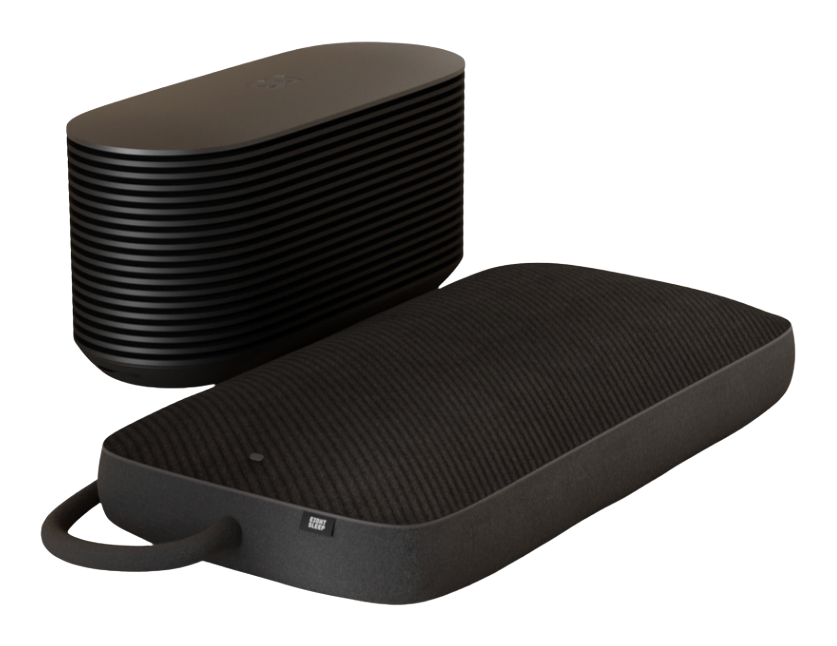
Eight Sleep Pod 6
Verdict
"One Bio Star. Awarded for the only bed in the consumer market that senses a sleeping body and changes itself in response, built by a company that keeps rebuilding it until the friction is gone."
Your bed has been the same environment all night for the whole of human history. You are not. The Pod 6 circulates water through a mattress cover from a 550 watt thermoelectric engine, holding each side of the bed anywhere from 55 to 110 degrees Fahrenheit independently, while eighteen piezoelectric sensors, nine to a side where the last generation had one, read the recoil of the body for heart rate, breathing and sleep stage. An algorithm adjusts through the night and explains itself the next morning. With the Base, snoring raises the sleeper's head automatically. It is the only consumer system that closes a loop on two axes from body signals, and the Inspectorate looked hard for someone doing it better and did not find one. The engineering is the best in this volume, and it is worth being specific about why. Half the hub volume at thirty-seven percent more power. Priming cut from twenty minutes to five. The distilled-water requirement gone. Two cables reduced to one. Every one of those answers a complaint owners actually made about earlier generations, which is a company listening, and the institution counts it. The mechanism underneath is real science rather than marketing: moving skin temperature by four tenths of a degree measurably changes sleep architecture, and in older adults the best study in the field nearly doubled slow-wave sleep and cut the probability of early-morning waking from 0.58 to 0.04. Eight Sleep is working on the right lever. What holds the file at one star is documentary rather than mechanical, and every item sits within the company's own power to close. The only randomised controlled independent trial of a Pod found large, genuine improvements in how people felt and how comfortable they were, and did not detect change in objective sleep measures. The four percentages in the advertising come from real internal studies whose published figures are ceilings rather than averages. The five-year warranty shown on the product page is the subscription tier; the warranty document provides two years for this device. The help centre and the binding privacy policy disagree about whether personal information is sold, and the policy is the one that governs. The fabric against skin for eight hours a night carries no textile certification. And Autopilot, the reason the subscription exists, has not yet been compared against a manually programmed schedule, which is the most interesting unanswered question about this product and the one the Inspectorate would most like to see answered. One Bio Star by ruling of the principal on months of nightly use, with the computed tier and the seven moved scores recorded in full. The Inspectorate expects to be revisiting this file.

BIO-STARRED
VOL. I · MMXXVI–MMXXVII
13-Circle Assessment
Inspector Notes
"I want to start with the thing that actually changed how I think, because it is not the sensors and it is not the app."
"Your bed has always been the same environment from the moment you fall asleep until the moment you wake up. You set the thermostat, you pick a blanket, you get in. But you are not the same for eight hours. Your core temperature falls and rises. You move through stages. Your cardiovascular system changes. Hormones change. For a lot of women, the month changes it, and then a decade changes it permanently. And the traditional answer to all of that has been one blanket and one number on a wall."
"The Pod makes the surface underneath you responsive. That is the idea, and I think it is a genuinely good one."
"Michael's side and my side are different temperatures every night. We are six inches apart and we do not need the same environment, and I had never once questioned that we were forced to share one until it stopped being true. The Hub sits under the bed doing something while I am unconscious and I have stopped hearing it. The first week I kept checking the app in the morning to see what had happened overnight. Now I mostly do not, and I think that is the highest compliment I can pay a piece of technology in a bedroom. It disappeared."
"There is something strange about letting a mattress cover know your heart rate and your breathing. I expected to mind it more than I do. What I do mind is what I found in the paperwork."
"The five-year warranty on the product page is not a product warranty. It is a subscription feature. Their own warranty document names the Pod 6 in the two-year clause, and it says warranty coverage of any length requires an active membership throughout. Stop paying and you may have no warranty at all. And their help centre says they do not sell your personal information while their binding privacy policy says they do sell and share identifiers, purchase history and web activity. Your heart rate is genuinely excluded, and they deserve real credit for stating plainly that pseudonymised is not anonymised, which almost nobody does. But both of those sentences cannot be true, and the one in the contract is the one that counts."
"Then the science, which is where I had to be hardest on something I like."
"The mechanism is real. Warming or cooling skin by less than half a degree genuinely changes sleep architecture, and in older people the best study in the field nearly doubled deep sleep and cut early-morning waking from a 58 percent chance to a 4 percent chance. That is not marketing, that is Brain, 2008."
"But the only randomised controlled independent test of an actual Pod found nothing objective at all. Not total sleep time, not time to fall asleep, not efficiency, not heart rate variability. What it did find, strongly, was that people felt much better about their sleep and were much more comfortable. The authors said plainly that expectancy might be part of it. I would rather print that than pretend otherwise."
"And the numbers on the website are ceilings rather than averages, which I only know because they published the studies for me to check. The 34 percent more deep sleep is the ceiling of a correlation among the most sleep-deprived people in an uncontrolled study, measured by somebody else's ring. The 44 percent faster sleep onset is a fifty-person questionnaire, and in the randomised trial the real difference was one minute and not significant. Clinical-grade accuracy footnotes to a subscription requirement rather than to a study."
"The thing I cannot get past is that Autopilot has never once been compared to a manually programmed schedule. That comparison does not exist anywhere. It is the whole reason the subscription exists and nobody has measured it."
"One Bio Star, and I want to be clear that I ruled it there rather than the engine handing it to me. Scored honestly at the anchors it came out just below, gated by stewardship, and I moved seven scores on the strength of actually living with it, which is recorded in every one of those notes. It is the best-engineered object in this volume. It is also a machine whose intelligence is sold monthly and has not yet been tested against the simplest alternative. Both of those are true and the file says both, because I think they are the kind of company that would rather know."
"Here is the thing I keep coming back to, and it is the reason this file runs to twenty entries instead of five. You can spend nearly three thousand dollars on a bed that senses your body and changes itself all night, and nobody on earth has checked whether that beats setting a schedule by hand. Not Eight Sleep, not a university, not a competitor, nobody. That is not a scandal and I do not write it as one. It is simply the question anyone would ask first, sitting unasked in the middle of a category worth billions. That is what I want a Bio Star to be for. Not a verdict on whether a thing is good, which you can get anywhere and which is worth nothing. A map of what is proven, what is promising and what is merely being said, drawn carefully enough that you can decide for yourself, and specific enough that the company can act on it. Everything in this file that costs Eight Sleep a star is something they could close, and I have written down exactly how. I would buy this bed again. I would also like to know whether the expensive part is the part that works. I suspect they would like to know that too, and I think they are the kind of company that would rather find out than not."
— Inspector 7
13-Circle Findings
Circle by Circle.
I · Core Integrity
Pass
The narrowest pass in this volume. Every efficacy figure carries a footnote attributing it to internal data, and the statement that the Pod is not a medical device appears site-wide, which is more attribution than this category normally offers. Against that, the product page displays a five-year warranty where the warranty document names the Pod 6 in its two-year clause, and the help centre states the company does not sell personal information while the binding Privacy Notice states that it does. The binding documents are accurate; the customer-facing summaries of them are not.
II · Efficacy
Partial
The underlying science is established and the product has not been shown to deliver it. Skin temperature manipulation of about four tenths of a degree causally changes polysomnography-scored sleep, replicated across young adults, healthy elderly, insomniacs and narcolepsy patients. The only randomised, controlled, independent trial of a Pod found no significant difference in any objective sleep or biometric measure, and large significant improvements in subjective quality and thermal comfort. Two qualifiers from the literature cut further: proximal and distal warming have opposite effects on sleep and the Pod does not distinguish them, and the founding work states that thermoregulation initiates sleep but does not appear to play a major role in its maintenance. No validation of any kind exists for the Pod 6 itself.
III · Physiological Alignment
Pass
The product targets the circadian temperature rhythm, which the independent literature identifies as the correct lever for sleep onset, by a method involving no drug, no stimulant and no induced injury. It works with thermoregulation rather than against it, at the amplitude the science says is effective.
IV · Regulation & Recovery
Partial
Heart rate reduction is the most consistent objective signal across the whole independent literature on cooled sleep surfaces, and the Pod reproduces it. The burden asked of the user is the lowest the Inspectorate has assessed in any category: nothing to wear, nothing to charge, nothing to decide. What is measured is breathing and movement, not apnea, and snoring reduction is not apnea treatment.
V · Input Quality
Partial
The Pod 6 rebuild is the most disciplined engineering in this volume. Three thermoelectric coolers per side, a ribbed heatsink with micro airfoil profiles, a nine-element sensor grid per side, in half the previous volume. Synthetic textiles are a functional necessity for a water-circulating thermal surface and natural fibre cannot do this job. The material against skin for eight hours a night, heated, carries no certification of any kind, and provenance, traceability and supplier documentation are all absent.
VI · Environmental Quality
Partial
The Hub halved in volume and now slides under most bed frames; the system is engineered to disappear, which for a bedroom is the correct ambition. Tap water replaced distilled, which is a real improvement. No decibel figure is published for this generation at any setting. A 550 watt thermoelectric engine necessarily rejects more than 550 watts of heat into the bedroom while cooling the bed, and no figure exists for that either.
VII · Operational Precision
Partial
Six generations and a mature line, and a Pod 6 rebuild that answers the actual complaint record point by point. Against that, no control-accuracy specification is published, which is true of every consumer sleep company and of none of the medical equivalents, where core temperature is held to two tenths of a degree and readjusted every two minutes. In October 2025 a cloud outage left beds unresponsive; an offline mode was promised within days and had not shipped four months later.
VIII · Care & Competence
Partial
Twelve or more PhDs in house, real institutional review board approvals, genuine instrumentation including ingestible core-temperature telemetry, a morning brief that explains in plain language what the system did, and a chief executive who apologised publicly within a day of the outage. Support responsiveness is the dominant negative theme in the public complaint record, and the twelve-month subscription commitment appears in the help centre and nowhere in the contract.
IX · Protocol Design
Partial
Five-minute priming, LED-guided filling, a cover that goes on like a fitted sheet, and nothing to wear, charge or decide thereafter. Adherence is the mechanism and this is the best friction reduction in wellness. Against it: a twelve-month lock-in, warranty coverage conditional on continuing to pay, an upgrade path from the cheapest tier that cannot reach the cheaper five-year option, binding arbitration, a class-action waiver and liability capped at one hundred dollars.
X · Aesthetic Restraint
Pass
The Pod 6 removed the water tank, the distilled-water requirement, a cable and half the Hub. Genuine subtraction in a category that only adds. Waking by warmth and vibration rather than noise is a real redesign of the least examined moment in sleep. The language did not follow the engineering: the most powerful Pod ever made, clinical-grade accuracy footnoted to a subscription requirement, and headline percentages that are subgroup ceilings presented as product attributes.
XI · Stewardship
Partial
The floor of this file. Maximum draw is published and actual consumption is not. There is no carbon figure, no target and no environmental position beyond a risk factor in a securities filing. The object is sealed, synthetic and not user-repairable, and the contract makes cloud connectivity mandatory, so the working life of the thing is bounded by the working life of the company's servers. Conditioning one bed rather than one house is the better trade and that argument is sound.
XII · Cultural Responsibility
Partial
Nothing is drawn from any community or tradition uncredited, and the scientific literature is cited accurately in the company's own technical writing. Manufacturing location, supplier relationships and labour practices are all undisclosed. The homepage restates subgroup ceilings as product attributes, and the menopause positioning runs against the current specialist guideline, which lists cooling techniques as not recommended for vasomotor symptoms.
XIII · Enduring Value
Partial
Twelve years and six generations through a category full of one-season products, and a device that integrates into a life by disappearing from it. Against that, the effect lasts exactly as long as ownership and payment, the internals are not serviceable, cloud connectivity is contractually required, and the product is six days old, so nothing whatever is known about how it ages.
The Record
What was examined.
The system
A mattress cover and a hub. Water circulates through the cover from a 550 watt thermoelectric engine using three thermoelectric coolers per side, holding each half of the bed anywhere between 55 and 110 degrees Fahrenheit, independently for two sleepers. The Hub measures 16.54 by 7.87 by 6.50 inches and weighs 15.2 pounds, which is 846 cubic inches against 1,536 for the previous generation, and now fits under most standard bed frames. Optional additions are a Base that elevates the head and feet and carries a speaker, a Blanket that doubles the conditioned surface area, and a Pillow Cover, which requires a second Hub for independent regulation. Retail is 2,899 dollars plus a subscription.
What this company does that most do not
The Inspectorate makes a practice of recording candour where it finds it, because this category offers few opportunities. Eight Sleep publishes its internal research openly, with sample sizes, designs and stated limitations, on a blog anyone can read, which is why this file could trace every advertised figure to a source. It attributes every efficacy percentage to internal data in a footnote rather than implying independence. It carries the statement that the Pod is not a medical device prominently and site-wide. It describes itself as pursuing FDA clearance rather than implying it holds one, at a moment when several competitors are less careful. Its employee-authors disclose their equity in full in the peer-reviewed literature. Its chief executive apologised publicly and by name within a day of the 2025 outage. And it drew a distinction about pseudonymised data in its privacy policy that most companies quietly avoid. None of this changes the arithmetic. All of it is why the Inspectorate wrote nineteen entries about a product it could have dismissed in five.
What the sensors are
Eighteen piezoelectric elements, nine to a side, where the Pod 5 had one per side. Piezoelectric sensing here is ballistocardiography: the mechanical recoil of the body from each heartbeat and each breath is picked up as vibration and converted to a signal. From that the system derives heart rate, heart-rate variability, breathing rate, movement, snoring and sleep stage, with no wearable. The company states that the denser grid gives the system greater spatial awareness so it can separate one sleeper's biometrics from another's however close they sleep, and whether or not a child or pet joins them. That sentence is the entire public explanation. No method is disclosed, no accuracy figure exists under those conditions, and the previous generation's help documentation concedes that one person's movement could be attributed to the other's side.
What the Pod 6 changed
Half the Hub volume at 550 watts against 400. Temperature relief about twenty percent faster. Priming reduced from roughly twenty minutes to five, with the removable tank replaced by pouring directly into the Hub under LED guidance. The distilled-water requirement is gone; tap water is now acceptable. The maintenance insert is replaced by a liquid solution added twice a year. Water cord and USB cable are combined into one connector across all components. Every one of these answers a documented complaint about earlier generations, and taken together they are the clearest evidence in the file that the company listens to its owners.
Autopilot
The intelligence layer, at version 4.0 since April 2026. It takes sleep stage, heart rate, heart-rate variability, breathing, bedroom temperature, local weather, personal history, and since 4.0 daytime signals pulled from Apple Health and Health Connect including workouts, activity, recovery and alcohol. It adjusts temperature through the night and, each morning, delivers a plain-language account of what likely happened and how it responded. The company states the system is fully personalised after about seven nights. Fully personalised is defined nowhere, no convergence criterion is published, and the same page says it only gets better with time. Whether a user can override it, and whether it learns from overrides, is stated in no document the Inspectorate could find.
The open question at the centre of Autopilot
Autopilot has not yet been compared against a manually programmed temperature schedule. No study, internal or external, published or preprint, has run that comparison. The one head-to-head that exists compared Autopilot 2.5 against Autopilot 2.0, which is a real test of an upgrade. The conference abstract on stage-based adjustment compared sleeping on the Pod against not sleeping on the Pod, which cannot separate the algorithm's contribution from the cooling hardware's. The Inspectorate raises this not as a criticism of the algorithm, which may well be doing exactly what the company believes it does, but because it is the most interesting claim in the product and nobody has yet measured it. A company with twelve PhDs and a fleet this size is better placed to answer it than anyone alive.
What the independent science establishes
A great deal, and it is genuinely favourable to the mechanism. Mild skin-temperature manipulation of about four tenths of a degree, within the comfortable range and without changing core temperature, measurably alters polysomnography-scored sleep: it suppresses wakefulness and increases slow-wave sleep. In healthy elderly participants a 0.4 degree increase nearly doubled slow-wave sleep and reduced the probability of early-morning awakening from 0.58 to 0.04. The distal-to-proximal skin gradient predicts sleep onset latency better than core temperature, better than heart rate, better than melatonin onset and better than how sleepy a person says they are. The best-controlled multi-site study of a cooling sleep surface, 72 people across three cities with full polysomnography, found an increase of 7.5 minutes of deep sleep across a 7.5 hour night and a heart rate 2.36 beats per minute lower.
What the independent science does not establish
Three things the Inspectorate regards as decisive. First, proximal and distal warming have opposite signs: warming the torso reduces wakefulness and increases deep sleep, while warming the extremities increases wakefulness and light sleep at the cost of deep and REM sleep. A surface that conditions the whole body does not distinguish them. Second, the founding work in this field states that circadian thermoregulation initiates sleep but does not appear to play a major role in its maintenance, which is the premise the all-night adaptation rests on. Third, thermoregulation is largely abolished during REM sleep; a sleeper in REM cannot defend body temperature, and the only response available is waking. That is a mechanistic argument for small, slow, conservative changes, and no independent trial has tested stage-triggered thermal actuation against a sham.
The one randomised independent test
Stevenson, Suppiah, Mundel and Driller, published in Clocks and Sleep in October 2025. Randomised, counterbalanced crossover, 34 healthy adults, seven nights with the temperature system active and seven with it disabled, funded by La Trobe University with no declared conflicts. The subjective results were strong and significant across the board: calmness, ease of falling asleep, ease of waking, feeling refreshed, sleep satisfaction, thermal sensation and thermal comfort, with weekly sleep quality improving at an effect size of 0.92, which is large by any standard. The objective measures did not move: total sleep time, wake after sleep onset, sleep onset latency, sleep efficiency, heart rate, heart-rate variability and respiratory rate all returned no significant difference. The authors noted that expectancy may account for part of the subjective gain. The Inspectorate records the whole of that result in both directions, and adds the context that makes it fair: the largest effect ever verified by polysomnography for any cooled sleep surface, in the best-controlled study in this field, is seven and a half minutes of additional deep sleep across a whole night. An effect of that size is genuinely difficult to detect in 34 people over seven nights. The null is a real finding and it is not proof of absence.
The four percentages, and what they measured
Eight Sleep publishes the studies behind its headline numbers openly, with sample sizes, methods and stated limitations, on a blog anyone can read. Very few companies in this category publish anything at all, and this file could trace every advertised figure to a source only because the company made that possible. What the sources show is that the published numbers are ceilings rather than averages. Up to 34 percent more deep sleep is the top of a correlation among the most sleep-deprived participants in an uncontrolled study of 310 existing customers measured by a competitor's ring; the average across all 310 is not published. Up to 44 percent less time to fall asleep and 32 percent better sleep quality come from one uncontrolled retrospective questionnaire of 50 people; under a randomised control condition the sleep-onset difference was one minute and not significant. Reduce snoring by up to 45 percent is the figure at 15 degrees of head elevation, the most aggressive setting, in an internal study of 39 people, and it requires the Base; at 6 degrees the figure is 31 percent. All four carry a footnote attributing them to internal study data, which is to the company's credit. Publishing the averages and the confidence intervals beside the ceilings would cost very little and would make these claims unimpeachable.
Clinical-grade accuracy
The phrase appears throughout the marketing. On the product pages it carries a footnote, and the footnote resolves not to a study but to the words Autopilot membership required. The underlying data are real and internal: heart rate against electrocardiogram across 163 subjects and 474 nights returned a correlation of 0.996 with mean absolute error under one beat per minute, which is genuinely excellent; heart-rate variability returned a mean absolute error of 5.7 milliseconds, which is a material fraction of a signal that typically runs between 20 and 80; sleep staging is reported at 78 percent accuracy with no Cohen's kappa published, which is below the technician agreement the company itself cites as the benchmark. All of it was generated on a Pod 3 with two sensors. The Pod 6 has eighteen and has been validated by nobody.
On measuring your own intervention
A methodological point that applies to this whole category rather than to Eight Sleep alone. The independent literature on consumer sleep staging is consistent: non-electroencephalographic devices detect sleep well and wake poorly, and four-stage discrimination remains unreliable, with deep-sleep sensitivity between 0.53 and 0.68 and positive predictive value between 0.44 and 0.58. Accuracy degrades in exactly the disturbed sleepers who most want help. For ballistocardiography specifically, one clinical-population validation found total sleep time overestimated by nearly three hours and staging that did not function at all. Several of Eight Sleep's internal studies measure the effect of the Pod using the Pod's own sensors, which is standard practice across this industry and is nonetheless a problem the industry has not solved, because the measurement error is larger than the largest effect in the independent literature. The Inspectorate records this as the reason it weights the one polysomnography-referenced independent trial so heavily, and as the strongest argument for the company to fund an external one.
On menopause
The company has studied nocturnal temperature regulation in peri- and post-menopausal women and reports a 56 percent reduction in hot flashes across a 14-night protocol in 98 women. The work is a preprint and has not passed peer review. Its methods are the company's strongest: ingestible core-temperature telemetry, skin thermistors at three sites, and urinary hormone confirmation of menopausal status. Its weaknesses are serious: the primary outcome is self-reported, 39 of the 98 were not randomised but received a fixed order, participants were recruited from existing Pod owners, and the standard deviations on two of the three reported outcomes are four times the size of the effect. Set against it, the 2023 position statement of the North American Menopause Society lists cooling techniques among interventions that are not recommended, and the one polysomnography study of this exact population found that hot flashes did not predict objective sleep efficiency at all, while 53 percent of the women had undiagnosed apnea, restless legs or both. The Inspectorate records that a cooling product which displaces a sleep-apnea workup is a net clinical harm, and that this is the single most important caution in the file.
Regulatory standing
Eight Sleep holds no FDA clearance and no Abu Dhabi HTA clearance for any function. It describes itself as pursuing both for sleep apnea, present tense, and a trial with Abu Dhabi's Department of Health began in August 2026 with no results published. The site-wide disclaimer that the Pod is not a medical device and is not intended to diagnose, treat, cure or prevent any disease is correct and prominent. The Inspectorate records the position exactly as it stands today, and notes that snoring reduction is not treatment for obstructive sleep apnea and must never be presented as such.
The warranty, and what the documents say
The product page displays a five-year warranty. The warranty document names the Eight Sleep Pod 6 in the clause providing two years. Five years is available only by purchasing Autopilot Enhanced or Elite at checkout, and the same document states that warranty coverage requires an active Eight Sleep membership during the applicable coverage period for both standard and extended warranties. Read plainly, ending the subscription puts coverage of either length at risk. Downgrading collapses five years to two; upgrading does not restore it. Coverage runs from delivery rather than first use, is non-transferable, and replacements do not restart the clock. Consequential damages are expressly disclaimed, so a cover that leaks onto a mattress leaves the mattress as the owner's loss. Disputes go to confidential binding arbitration in New York with a class-action waiver, and total liability is capped at the greater of twelve months of payments or one hundred dollars. None of this is unusual for connected consumer hardware. The Inspectorate records it because a buyer reading the product page would reasonably expect five years unconditionally, and stating the two-year term there with the upgrade offered alongside it would cost the company nothing and close the gap entirely.
What stops when the payment stops
The manual temperature dial survives and each side can still be set by hand. What disappears is the temperature schedule, automatic adjustment, the vibration and thermal alarms, all sleep and health reports, Away Mode, snoring detection and snoring mitigation. The Terms of Service state that an active subscription is required to access core App features and full Pod functionality including thermoregulation, biometric tracking and AI-powered personalisation, and that without one the Pod may continue to provide limited basic temperature control. Autopilot is required for the first twelve months of ownership, a term that appears in the help centre and nowhere in the contract. What happens to years of accumulated biometric history on cancellation is addressed in no document the Inspectorate could find.
Privacy, where the company is better than its own summary
Eight Sleep does something here that almost no company in this category does: it states explicitly that pseudonymised data retains indirect identifiers and is not considered deidentified. That is a real distinction, honestly drawn, and it is to the company's considerable credit. Biometric data, the heart rate and breathing and variability that people most worry about, is excluded from advertising and remarketing use. The gap is in the summary rather than the substance. The binding Privacy Notice states that the company does sell and share identifiers, commercial information and internet activity for marketing, advertising and analytics purposes. The help centre states that the company does not sell personal information to third parties. Both cannot be true as written, and correcting the help centre to say what is actually the case, that biometrics are not sold, would leave the company better represented than it currently is. One further note: the encryption commitment lives in a blog post rather than in the binding notice, which contains no encryption language and says instead that information sent electronically may not be secure while in transit.
Connectivity, and what the object is without it
The Terms of Service state that the Pod requires a Wi-Fi internet connection and the App to operate, and that the Services depend on cloud connectivity. There is no documented offline or local-only mode. The Hub carries one physical button and its only documented function is pairing. In October 2025 a cloud provider outage left beds unresponsive, with one side reported stuck at 110 degrees and bases stuck upright; the chief executive apologised publicly within a day and promised outage-proofing, and as of January 2026 no offline mode had shipped or been discussed again. For a device that costs nearly three thousand dollars and is designed to last, the Inspectorate regards mandatory cloud dependency as the most consequential design decision in the product.
Who else is doing this
Nobody is doing the same thing better, and that is a genuine finding. Eight Sleep is the only consumer system that closes a loop on two axes, thermal and postural, from physiological sensing. The nearest rival on mechanical sophistication controls four hundred springs individually and costs between fifty and a hundred and ten thousand dollars, has published no evidence of any kind, and its cooling does not ship until late 2026. The company with the best sensing evidence, two peer-reviewed polysomnography validations, controls temperature on a timer rather than on the body and entered Chapter 11 in June 2026. The two best-known water and air systems do not sense the body at all, and one says so plainly in its own marketing. Against the medical standard the gap remains wide: targeted temperature management in hospital senses core temperature invasively, holds it to two tenths of a degree, readjusts every two minutes and limits the gradient between patient and water as a safety principle. No consumer sleep company publishes a control-accuracy specification. Not one.
How the tier was computed
Ninety-one sub-criteria were scored at the published anchors, where 3 meets the institutional standard, 4 exceeds it and 5 sets it. Circle I passed on all seven binary tests. Three sub-criteria were recorded N/A: culinary integrity, regenerative practice and cultural authenticity, none of which has a subject in a bedroom device. The honest first pass returned an institutional score of 3.42 with a floor of 3.00 at Stewardship, which is Finalist: the floor cleared the requirement for One Bio Star and the institutional score fell eight hundredths short of the 3.5 required. The principal ruled One Bio Star on the strength of months of nightly use, and seven scores were revised on that evidence, each carrying the ruling in its note: sensory burden, usability, real-life integration, repeatability, nervous-system stability, component selection and operational learning. Five of the seven are criteria on which direct nightly use is the best evidence available and on which the Inspectorate had scored an absence of published data rather than an observed failure. The revised file computes an institutional score of 3.50 with the floor unchanged at 3.00, which is One Bio Star at the anchors. Two Bio Stars requires a floor of 3.5, a score of 4.0 and six Circles at 4.0 or above; this file has two. The distance is almost entirely documentary rather than mechanical, and a single independent trial would close most of it. The Inspectorate regards this as a file with an unusually short road to its second star.
Open Items
What the file is waiting for.
The one experiment that would earn the second star
One randomised controlled trial, conducted by a party with no financial interest, using polysomnography rather than the Pod's own sensors, in the home rather than a laboratory, over at least four weeks, on Pod 6 hardware, comparing Autopilot against a manually programmed temperature schedule. That single study would address Efficacy, Enduring Value and Operational Precision together. Nothing else the company could do comes close to it.
Publish the Pod 6 sensor validation
Every accuracy figure the company publishes was generated on a Pod 3 with two sensors per bed. The Pod 6 has eighteen. Publish the validation of the shipping hardware against a medical reference, with per-stage sensitivity and specificity, Cohen's kappa, and Bland-Altman bias and limits of agreement, which is the field's own published standard for this kind of claim.
Publish a control-accuracy specification
State how closely the system holds a set temperature, against what reference, at what interval, and under what ambient conditions. No consumer sleep company publishes one. The medical equivalent holds core temperature to two tenths of a degree and readjusts every two minutes. Publishing this would be a first for the category and would settle the most important unanswered question about the product.
Publish the textile chemistry
The Cover lies against skin for eight hours a night and is heated. No OEKO-TEX certification, no PFAS statement, no flame-retardant disclosure and no volatile organic compound data exists for it. The only certification the company names anywhere is CertiPUR-US, and it applies to mattress foam the owner may not have bought.
Publish a decibel figure
No noise measurement exists for this generation at any setting. The company offers the adjective quietly. A sleep machine's noise is not a detail, and the measurement is trivial to make.
Show the two-year term on the product page
The product page advertises five years; the warranty document provides two for this device and conditions coverage of either length on continuing to pay a subscription. State the two-year term on the product page with the upgrade offered alongside it.
Let the help centre say what the policy already says
The help centre states that the company does not sell personal information. The binding Privacy Notice states that it does. Correct the help centre, and say plainly what is true and creditable: that biometric data is excluded.
Ship the offline mode
Promised within days of the October 2025 outage and, four months later, not shipped. The terms still require an internet connection for the Pod to operate. A three-thousand-dollar object should not stop working because a data centre does.
State what happens to the data on cancellation
No document addresses what becomes of years of accumulated biometric history when a subscription ends. Owners should be told before they buy.
Put the twelve-month commitment in the contract
The mandatory first-year subscription appears in the help centre and nowhere in the Terms of Service. A material commercial term belongs in the binding document.
Publish the averages beside the ceilings
Up to 34 percent is a subgroup ceiling whose average is unpublished. Up to 44 percent comes from an uncontrolled questionnaire and is one minute and not significant under a control condition. Publish the averages and the confidence intervals, or retire the figures.
Name the carbon position
No figure, no target and no environmental disclosure beyond a securities risk factor, for an appliance that draws up to 550 watts nightly in millions of bedrooms.
Extend the company's own disclosure standard to its advisors
The company's employee-authors disclose their equity in full in the published literature, which is the right standard. Applying the same standard to the external scientific advisors, whose public credibility carries real marketing weight, would close the last gap in an otherwise strong disclosure practice.
Country of manufacture
Not disclosed anywhere for the Hub, the Cover or the Base.
The Reading Room
Inside the Unredacted File.
The full 13-Circle rubric. The Inspector's complete notes. The Evidence behind every finding. Filed inside the Membership.
Apply for Membership →Continue the Archive